

Types of Advanced Therapies
Gene therapy is a technique that modifies a person’s genes to treat or cure disease. Gene therapies can work by several mechanisms:
- Replacing a disease-causing gene with a healthy copy of the gene
- Inactivating a disease-causing gene that is not functioning properly
- Introducing a new or modified gene into the body to help treat a disease
Gene therapy products are being studied to treat diseases including cancer, genetic diseases, and infectious diseases.
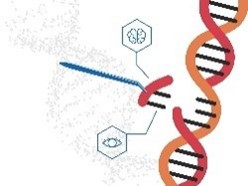
Watch Gene Therapy Basics (American Society of Gene and Cell Therapy) to learn more about Gene Therapy.
Gene therapies are considered to be GMOs because they involve the use of genetically modified organisms (GMOs) as vectors to deliver therapeutic genes.
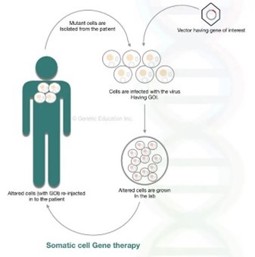
Cell therapy involves transferring cells into a patient to repair or replace damaged tissue, or to treat a disease. These cells can be either from the patient (autologous) or a donor (allogeneic). It's a broad field encompassing various approaches, including stem cell transplantation and gene-modified cell therapy.
To learn more about Cell Therapy, watch Cell Therapy Basics (American Society of Gene and Cell Therapy).
Cell therapy can be a GMO, but it depends on whether the cells have been genetically modified outside of the body (ex vivo) using gene technology. If genetic material is manipulated during the manufacturing process, it may be classified as a GMO, especially if the cells are intended to be reinfused into the patient. For example, CAR-T cells which involve the genetic manipulation of an autologous cell that is then reinfused is regulated as a biological and it is seen as a genetically modified cell therapy.
ASOs are not considered ‘gene therapy’ as they only make contact with RNA, not DNA.
There are two types of ASOs: splice-modulating and knockdown.
- Splice-modulating ASOs work by connecting to the mRNA and helping the cell splice the exons correctly. These ASOs have been used as therapies for diseases like spinal muscular atrophy (SMA) and Duchenne muscular dystrophy (DMD). Splice-modulating ASOs work best for recessive diseases, in which both copies of the gene are broken and the body is unable to make any functional protein. They help the body make some of the missing protein by fixing the splicing. These ASOs can usually only stop a disease from getting worse, but cannot often undo damage that has already been done.
- Knockdown ASOs work by connecting to the mRNA and silencing the message by activating an enzyme that degrades the RNA. They have been proposed as therapies for diseases like epilepsy or Huntington disease. Knockdown ASOs work best for dominant diseases, in which a gene makes too much of a protein or makes a toxic protein. These ASOs help decrease the amount of protein to a level the body can manage.
Antisense oligonucleotides (ASOs) are not considered to be GMOs. While they can be used to modify gene expression, they do not involve the introduction of foreign genetic material into an organism's genome in a way that permanently alters its DNA.